CASES
Houses made of silk
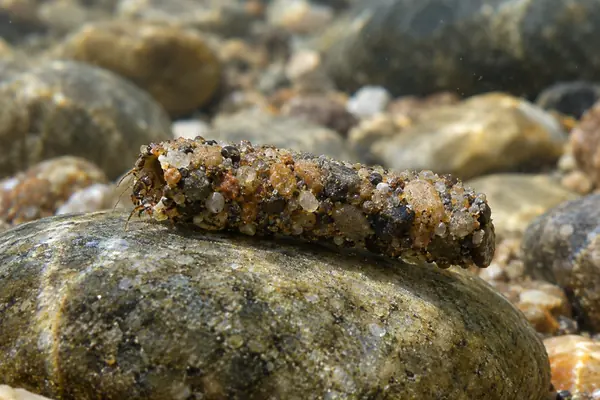
Cased caddis larvae make a portable case from silk, decorated with sand, shells, stones or leaves. When fully grown they seal it up to pupate inside.
Ways caddis live doodlecadd
Start
THE RIVER'S LITTLE BUILDERS
Turn over a stone in a clean stream and you may find a tiny house.
Caddisfly larvae spin silk and stick sand, stones or bits of plant to it to make a portable case. Because they are sensitive to changes in water quality, volunteers across the UK count them to keep watch on their local rivers.
199UK species
Check your trayKeep in mind
THE SHORT ANSWER
Caddisflies spend most of their lives as larvae underwater.
Three things worth knowing about them.
CASES
Cased caddis larvae make a portable case from silk, decorated with sand, shells, stones or leaves. When fully grown they seal it up to pupate inside.
Ways caddis liveMONITORING
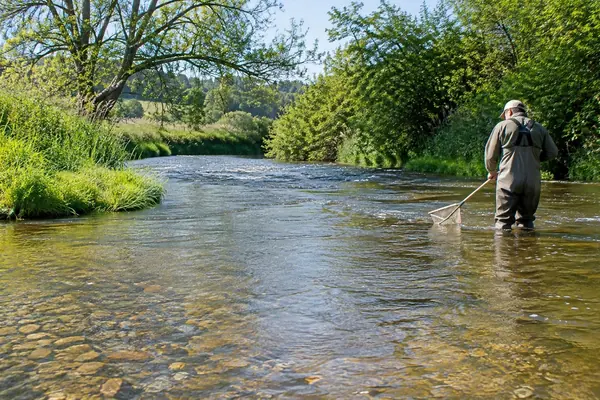
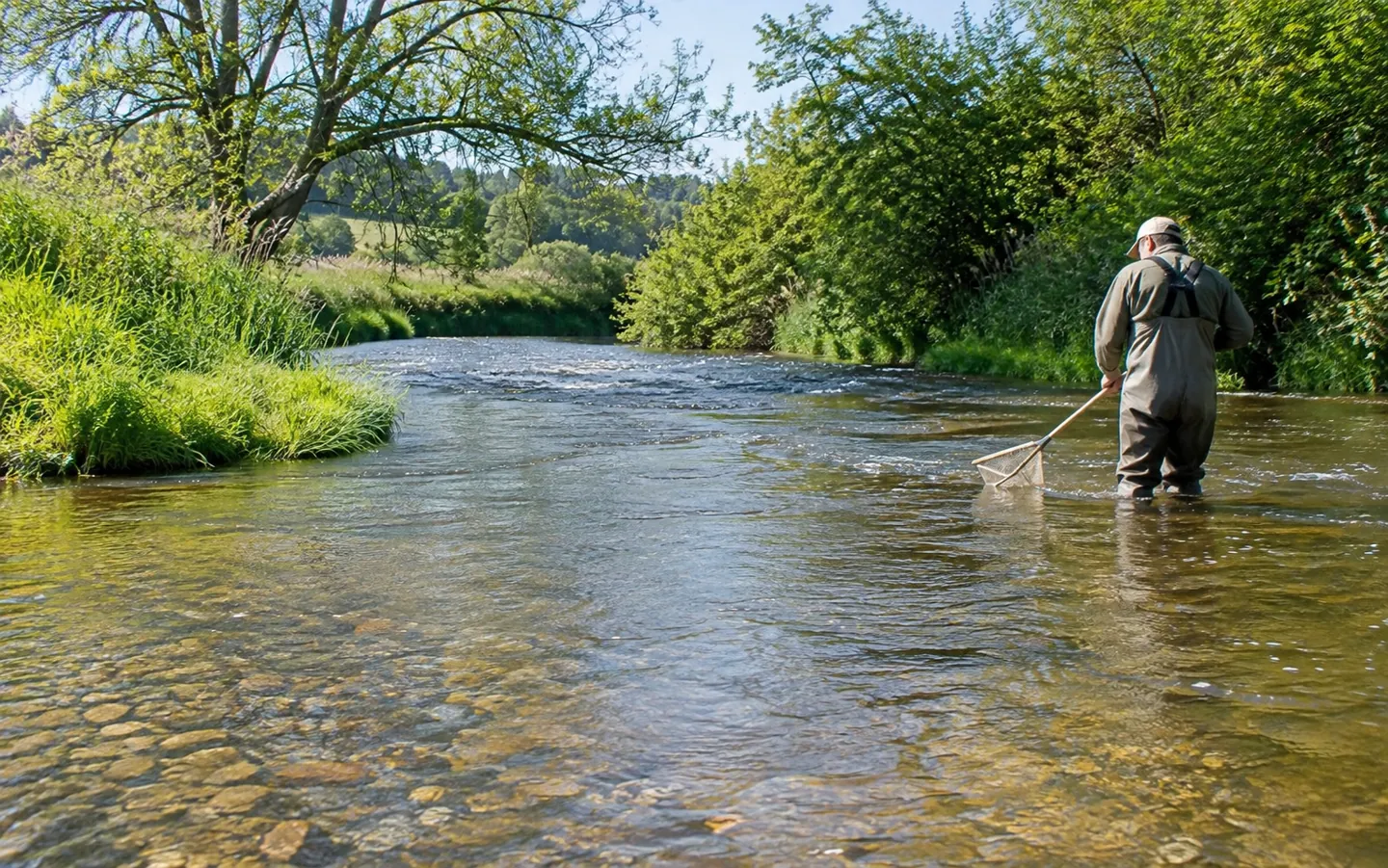
The Riverfly Partnership calls riverflies sensitive indicators of water quality. Trained volunteers do a three-minute kick sample each month and count what they find.
How sampling worksTHE COUNT
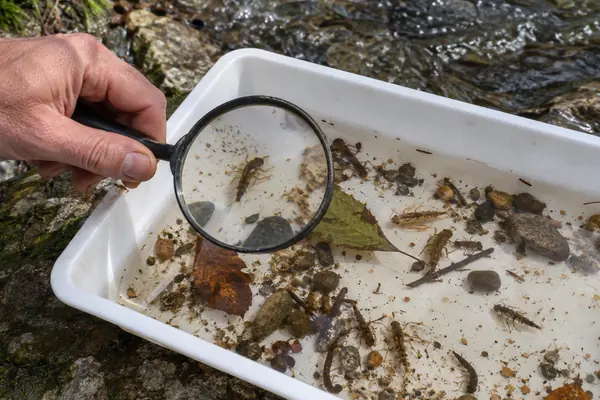
Monitors sort the sample into eight easy groups, including cased and caseless caddis. If the score falls below a site's trigger level, the agency is told.
See the numbersWHAT IS IN THE TRAY?
Pick the kind of caddis larva you have spotted. The bar gives a rough idea of how many British species live that way.
Based on Ian Wallace's Beginner's Guide to Caddis (2003). Species-level identification needs a microscope and keys.
TWO NUMBERS WORTH KNOWING
One figure for how varied caddisflies are,
one for how volunteers keep it simple.
199
Caddisfly species in the UK
The Riverfly Partnership lists 199 caddisfly species in the UK. Oxford University Museum of Natural History puts the world total at around 7,000.
UK SPECIES · RIVERFLY PARTNERSHIP
8 groups
Key invertebrate groups monitors count
The Riverfly Monitoring Initiative counts eight easily identified groups, including cased and caseless caddis. The Extended scheme covers 33 groups.
THE RMI COUNT · RIVERFLY PARTNERSHIP
Wallace's 2003 guide counted 198 British and Irish species in 18 families; lists change as species are recorded and reclassified.
HOW A RIVERFLY SURVEY WORKS
The Riverfly Monitoring Initiative is citizen science. No qualifications are needed, but monitors are trained by an accredited tutor and must be at least 18.
Step 1
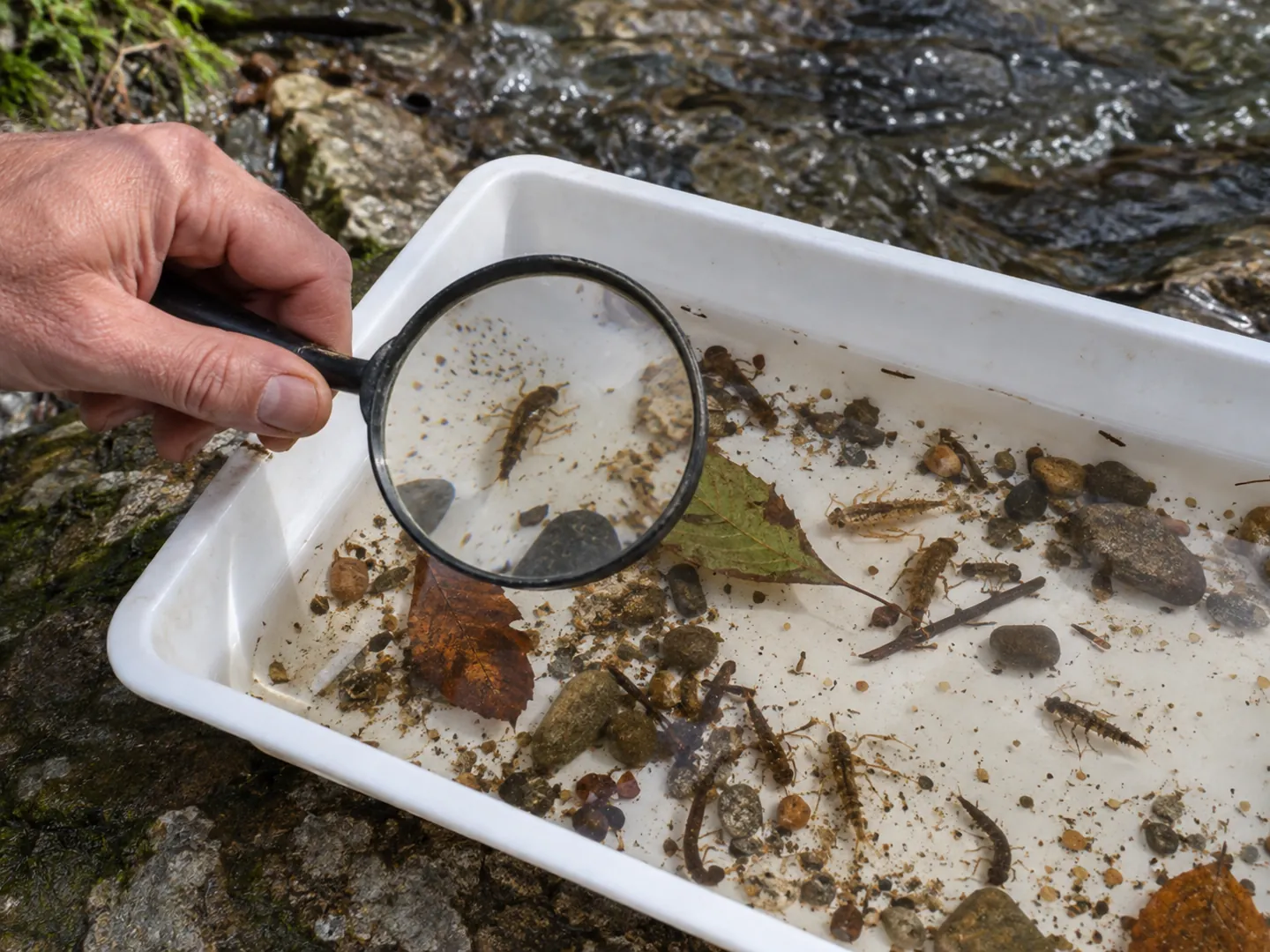
The monitor wades into the river at the agreed site for a three-minute kick sample, then does a one-minute hand search.
Step 2
The catch goes in a tray and is counted in eight groups, then returned to the water.
Step 3
A score is worked out. If it is below the site's trigger level, a second sample is taken to confirm.
Step 4
A confirmed breach goes to the local Environment Agency, NRW, SEPA or NIEA ecology contact via the group co-ordinator.
WHERE THE NAME COMES FROM
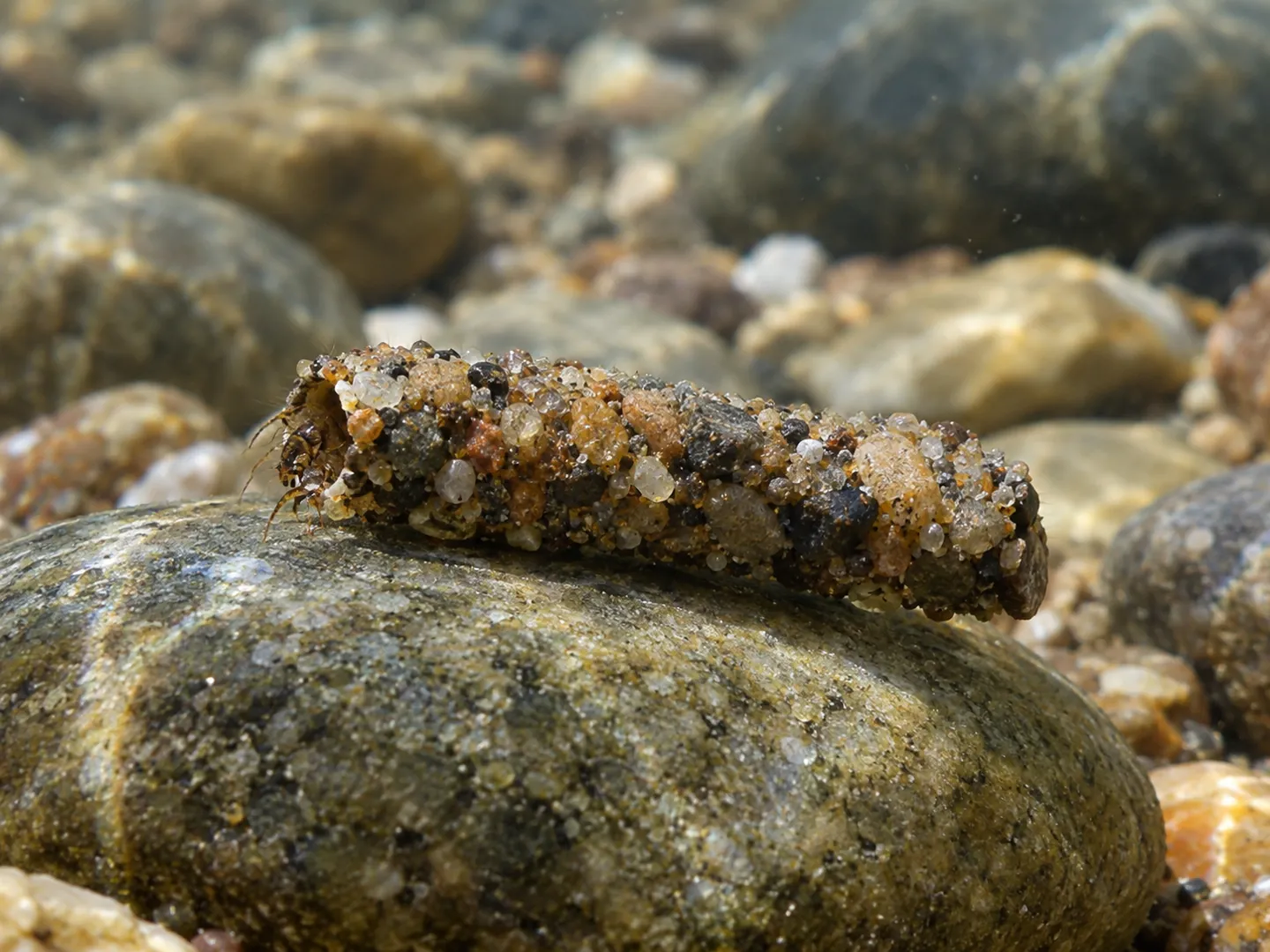
Ian Wallace's guide says caddis are thought to take their name from Elizabethan street hawkers called caddice men, who sold braid and had samples stitched to their coats, rather like a larva covered in bits and pieces.
The scientific name Trichoptera alludes to the hairy covering of the adult's wings. Adults look like moths but hold their wings in a roof shape over the body at rest, and generally fly at night.
Questions
An insect in the order Trichoptera, also called a sedge. The larvae live underwater and the adults are moth-like insects that generally fly at night, says the Riverfly Partnership.
Silk, decorated with whatever is around: sand grains, small stones, shells, plant stems or leaves. Some species make cases from small twigs, which the Oxford museum calls log cabins.
Riverflies, including caddis, have limited mobility, long life cycles and specific tolerances to pollution, silt and low flows, which makes them useful indicators of a river's health.
Yes, if you are 18 or over and able to wade in for a kick sample. The Riverfly Partnership trains volunteers and links them to a local co-ordinator.
The Riverfly Partnership says to report visible pollution, such as dead fish or a sudden change in colour or smell, to the 24-hour incident hotline: 0800 807060 in England, Scotland and Northern Ireland, or 0300 065 3000 in Wales.
Destination
Updated
ABOUT THIS NAME
doodlecadd.com is part of the DoodleSale portfolio. It isn't in an auction right now, but you can ask about leasing it.